Hijab, Workplace Discrimination, and Organizational Accommodation: A Systematic Literature Review on Intersectionality, Multicultural Policies, and Advocacy

Khoirul Huda, D Djono

Abstract


This article presents a systematic literature review of hijab, discrimination, and organizational accommodation in workplaces across North America, Europe, Asia, and Australia between 2016 and 2025. The review aimed to synthesize empirical and conceptual studies to understand how visible religious identity intersects with organizational culture, legal frameworks, and socio-political dynamics. Following PRISMA guidelines, searches were conducted using Scopus with keywords related to hijab, multiculturalism, tolerance, discrimination. The results highlight four thematic areas public attitudes, multicultural policies, and acceptance of visible religious identity; organizational and institutional accommodation between legal norms and implementation; discursive and political mechanisms normalizing intolerance; and advocacy architectures and cross-issue comparisons. Findings show that hijabi women face structural and intersectional discrimination influenced by national identity, Islamophobia, and stigma. Implementation gaps persist despite legal mandates, while extremist and populist rhetoric exacerbate resistance to accommodation. However, advocacy coalitions, media literacy programs, and context-sensitive HR strategies offer pathways to strengthen inclusivity. The review concludes that hijab-related workplace discrimination cannot be fully understood through single-identity frameworks; instead, intersectionality, stigma theory, and reasonable accommodation provide robust lenses for analysis.

Keywords


hijab; workplace discrimination; organizational accommodation; multicultural policy; intersectionality

Full Text:

PDF

References


Adihartono, W., & Jocson, E. (2020). A comparative analysis of the status of homosexual men in Indonesia and the Philippines. Journal of Southeast Asian Human Rights, 4(1), 271-305. https://doi.org/10.19184/jscahr.v4i1.12810

Alhussainy, R., Bertolini, C., & Kenny, C. (2024). Cough effectiveness during airway invasion in adults with oropharyngeal dysphagia: A systematic review of literature. Advances in Communication and Swallowing, 27(2), 83-99. https://doi.org/10.3233/acs-230012

Alkadi, F., Calvard, T. S., & Gottardello, D. (2025). Islamic religiosity: the influence of different forms of hijab on Saudi women’s experience of employment. Journal of Managerial Psychology, 40(6), 748-768. https://doi.org/10.1108/JMP-09-2024-0691

Alkhatib, M., Hasan, I., Ali, A., & Zaidi, Z. (2023). Unveiling the invisible: Challenges faced by Arab women international medical graduates in US academia. Academic Medicine, 99(11), 1199-1207. https://doi.org/10.1097/acm.0000000000005822

Amune, P. A. (2022). Populism and the Rise of Xenophobia among Italians toward Immigrants. The International Journal of Interdisciplinary Global Studies, 17(2), 1. https://doi.org/10.18848/2324-755X/CGP/v17i02/1-8

Apfelbaum, E. P., Grunberg, R., Halevy, N., & Kang, S. (2017). From ignorance to intolerance: Perceived intentionality of racial discrimination shapes preferences for colorblindness versus multiculturalism. Journal of Experimental Social Psychology, 69(March 2017), 86-101. https://doi.org/10.1016/j.jesp.2016.08.002

Baqai, B., Azam, L., Davila, O., Murrar, S., & Padela, A. I. (2023). Religious identity discrimination in the physician workforce: insights from two national studies of Muslim clinicians in the US. Journal of general internal medicine, 38(5), 1167-1174. https://doi.org/10.1007/s11606-022-07923-5

Celeste, L., Baysu, G., Phalet, K., Meeussen, L., & Kende, J. (2019). Can school diversity policies reduce belonging and achievement gaps between minority and majority youth? Multiculturalism, colorblindness, and assimilationism assessed. Personality and Social Psychology Bulletin, 45(11), 1603-1618. https://doi.org/10.1177/0146167219838577

Cintas, C., Heliot, Y., & Sprimont, P. A. (2020). Religious accommodation in France: decoding managers' behaviour. Employee Relations: The International Journal, 43(1), 83-107. https://doi.org/10.1108/ER-02-2020-0050

Cohu, M., Maisonneuve, C., & Teste, B. (2020). One Conception of Secularism for All? A Comparison of Conceptions of Laïcité Among Nonbelievers, Catholics, and Muslims in France. Journal for the Scientific Study of Religion, 60(1), 103-112. https://doi.org/10.1111/jssr.12703

Dana, K., Lajevardi, N., Oskooii, K. A., & Walker, H. L. (2019). Veiled politics: Experiences with discrimination among Muslim Americans. Politics and Religion, 12(4), 629-677. https://doi.org/10.1017/s1755048318000287

El Yattouti, N. (2025). Sterile, religiously neutral, and colourblind: on religious symbols in healthcare. Medical Law Review, 33(3), 023. https://doi.org/10.1093/medlaw/fwaf023

Fernandez Reino, M., Di Stasio, V., & Veit, S. (2023). Discrimination unveiled: A field experiment on the barriers faced by Muslim women in Germany, the Netherlands, and Spain. European Sociological Review, 39(3), 479-497. https://doi.org/10.1093/esr/jcac032

Forrest, J., Lean, G., & Dunn, K. (2017). Attitudes of classroom teachers to cultural diversity and multicultural education in country New South Wales, Australia. Australian Journal of Teacher Education, 42(5), 17-34. https://doi.org/10.3316/informit.884561488300464

Garcia Yeste, C., Botton, L. d., Alvarez, P., & Campdepadros, R. (2021). Actions to promote the employment and social inclusion of Muslim women who wear the hijab in Catalonia (Spain). Sustainability, 13(13), 6991. https://doi.org/10.3390/su13136991

Griffiths, E. (2016). The ‘reasonable accommodation’of religion: Is this a better way of advancing equality in cases of religious discrimination? International Journal of Discrimination and the Law, 16(2-3), 161-176. https://doi.org/10.1177/1358229116655652

Han, P., Duan, X., Jiang, J., Zeng, L., Zhang, P., & Zhao, S. (2023). Experience in the development of nurses' personal resilience: A meta‐synthesis. Nursing Open, 10(5), 2780-2792. https://doi.org/10.1002/nop2.1556

Hashem, H. M., & Awad, G. H. (2024). Hijab, Solo Status, Discrimination, and Distress among Muslim Women in the US. The Counseling Psychologist, 52(5), 773-801. https://doi.org/10.1177/00110000241242808

Hyder, N., Parrington, C., & Hussain, M. (2015). Experiences of hijabi women: Finding a way through the looking glass for Muslim Americans. Advancing Women in Leadership Journal, 35, 172-177. https://doi.org/10.21423/awlj-v35.a133

Kamp, A., Alam, O., Blair, K., & Dunn, K. (2017). Australians' views on cultural diversity, nation and migration, 2015-16. Cosmopolitan Civil Societies: An Interdisciplinary Journal, 9(3), 61-83. https://search.informit.org/doi/10.3316/informit.309803171145554

Karayigit, M. T., & Ilhan, J. (2022). A Fair Balance Between the Right to Religious Manifestation and the Freedom to Conduct a Business in the Cases of Headscarves Ban in Private Employment? Ankara Avrupa Calısmalari Dergisi, 21(2), 397-428. https://doi.org/10.32450/aacd.1226864

Kartono, D. T., Suyanto, B., Sugihartati, R., Yani, M. T., Sirry, M. i., Suryadinata, T. A., Prasetyo, B. J., & Andriani, L. (2025). Tolerance of high school students in an urban-transition city: a study in Batu City. Cogent Education, 12(1), 2445364. https://doi.org/10.1080/2331186X.2024.2445364

Khan, F., Kohli, S., Potsangbam, E., & Kharshiing, K. D. (2025). The Experiences of Hijab and Non‐Hijab‐Wearing Muslim Women Students: Exploring Social Isolation and Discrimination in Delhi, India. Journal of Community Psychology, 53(1), e23174. https://doi.org/10.1002/jcop.23174

Koura, F. (2018). Navigating Islam: The hijab and the American workplace. Societies, 8(4), 125. https://doi.org/10.3390/soc8040125

Kurniawan, E., Astuti, T., Utomo, C., & Trimasukmana, D. (2019). Using media literacy to prevent the dangers of hoaxes and intolerance among the students of Universitas Negeri Semarang. International Journal of Innovation, Creativity and Change, 8(7), 1-13.

Li, J. (2023). Research on multiculturalism citizenship and civic education. Applied & Educational Psychology, 4(1), 27-32. https://doi.org/10.23977/appep.2023.040105

Lizotte, M. (2023). A Diverse Minority of Intolerance: Ethnic Relations in a Multicultural Society. Nationalism and Ethnic Politics, 29(4), 441–460. https://doi.org/10.1080/13537113.2023.2270826

Maali, B. M., Hassan, M. K., & Rashid, M. (2024). Creating a religious identity and impression management by Islamic banks. International Journal of Islamic and Middle Eastern Finance and Management, 17(4), 693–710. https://doi.org/10.1108/IMEFM-05-2024-0240

McKim, R. (2017). Maintaining Neutrality While Teaching Religious Studies. In M. A. Pugliese & A. Y. Hwang (Eds.), Teaching Interreligious Encounters (pp. 65-78). Oxford University Press.

Mehra, R., Alspaugh, A., Dunn, J. T., Franck, L. S., McLemore, M. R., Keene, D. E., Kershaw, T. S., & Ickovics, J. R. (2023). “‘Oh gosh, why go?’cause they are going to look at me and not hire”: intersectional experiences of black women navigating employment during pregnancy and parenting. BMC pregnancy and childbirth, 23(1), 17. https://doi.org/10.1186/s12884-022-05268-9

Muthalib, S. A., Masrizal, Abdullah, I., M., Y., & Melayu, H. A. (2022). Public Services for Non-Muslims in Aceh: Non-Muslim Rights in The Application of Islamic Sharia Law. Res Militaris, 12(2), 87-101.

O’Dowd, E., O’Connor, P., Lydon, S., Mongan, O., Connolly, F., Diskin, C., McLoughlin, A., Rabbitt, L., McVicker, L., & Reid McDermott, B. (2018). Stress, coping, and psychological resilience among physicians. BMC health services research, 18(1), 730. https://doi.org/10.1186/s12913-018-3541-8

O’Sullivan, S. L. (2017). Applying cultural intelligence to religious symbols in multinationals. Cross Cultural & Strategic Management, 24(2), 365-382. https://doi.org/10.1108/ccsm-05-2015-0069

Okocha, M., & Giorga, A. (2024). 1276 Creating Safer Theatres. Tackling Religious Headwear Discrimination Nationally. British Journal of Surgery, 111(6), 163.041. https://doi.org/10.1093/bjs/znae163.041

Pattison, E., & Davidson, G. R. (2019). The role of perceived threat in Australians’ endorsement of asylum-seeker policies. Journal of Pacific Rim Psychology, 13, e21. https://doi.org/10.1017/prp.2019.13

Preston, K. (2024). Justifying contentious social and political claims using mundane language: An analysis of Canadian right-wing extremism. Current Sociology, 72(6), 1023-1048. https://doi.org/10.1177/00113921231182183

Rochira, A., Verbena, S., Briozzo, E., Simone, E. D., Esposito, F., Garrido, R., Ramirez, M. G., Paloma, V., Moniz, M. V., & Mannarini, T. (2024). Multiculturalism in dominant ethnic populations: A transnational profile analysis. International Journal of Intercultural Relations, 103(November 2024), 102051. https://doi.org/10.1016/j.ijintrel.2024.102051

Ryu, Y. (2022). Paradoxical configuration of advocacy groups for multiculturalism discourse in South Korea. Asian Ethnicity, 23(4), 762-783. https://doi.org/10.1080/14631369.2021.1976612

Sahrasad, H., Nurdin, M. A., Dar, M., & Baihaky, R. (2024). Multiculturalism, Islamophobia and the Muslim Minority in Australia: A Reflection. Journal of Al-Tamaddun, 19(1), 335–353. https://doi.org/10.22452/JAT.vol19no1.23

Saleh, N., Clark, N., Bruce, A., & Moosa Mitha, M. (2023). Using narrative inquiry to understand anti-Muslim racism in Canadian nursing. Canadian Journal of Nursing Research, 55(3), 292-304. https://doi.org/10.1177/08445621221129689

Sarian, E. (2018). Rethinking Neo/liberalism and the Australian citizenship test: A history of regulating difference. Cultural Studies Review, 24(1), 119-136. https://doi.org/10.5130/csr.v24i1.5455

Schneider, R. C., Mabute-Louie, B., Howard Ecklund, E., & Daniels, D. (2024). “Take It to the Lord”: Religion and Responses to Racial Discrimination in the Workplace. Sociology of Race and Ethnicity, 10(2), 177-191. https://doi.org/10.1177/23326492241231766

Schumann, S., Klein, O., Douglas, K., & Hewstone, M. (2017). When is computer-mediated intergroup contact most promising? Examining the effect of out-group members' anonymity on prejudice. Computers in Human Behavior, 77(December 2017), 198-210. https://doi.org/10.1016/j.chb.2017.08.006

Sewerynik, J. (2023). Freedom of Religion in the European Public Space. Studia Iuridica, 16(96), 318-333. https://doi.org/10.31338/2544-3135.si.2023-96.16

Sharma, K., & Pande, A. (2024). Comparative Study of Essential Religious Practices under Secularism in India, France, and the USA International Journal for Multidisciplinary Research 6(5), 1-6.

Singh, A. (2018). Conflict between Freedom of Expression and Religion in India: A Case Study. Social Sciences, 7(7), 108. https://doi.org/10.3390/socsci7070108

Stolle, D., Harell, A., Soroka, S., & Behnke, J. (2016). Religious symbols, multiculturalism and policy attitudes. Canadian Journal of Political Science, 49(2), 335-358. https://doi.org/10.1017/s0008423916000561

Syed, I. U. (2021). Hijab, niqab, and the religious symbol debates: Consequences for health and human rights. The International Journal of Human Rights, 25(9), 1420-1435. https://doi.org/10.1080/13642987.2020.1826451

Tabakakis, C., Bradshaw, J., McAllister, M., & Sahay, A. (2025). Exploring Registered Nurses' Experiences of Workplace Adversity: A Descriptive Qualitative Study. Nursing Open, 12(4), e70233. https://doi.org/10.1002/nop2.70233

Tabesh, P., & Jolly, P. M. (2019). Beyond the law: Processes underlying religious accommodation decisions. Management Decision, 57(5), 1254-1266. https://doi.org/10.1108/md-11-2017-1087

Tariq, M., & Syed, J. (2018). An intersectional perspective on Muslim women's issues and experiences in employment. Gender, Work & Organization, 25(5), 495-513. https://doi.org/10.1111/gwao.12256

Thiessen, J. (2016). Kids, You Make the Choice: Religious and Secular Socialization among Marginal Affiliates and Nonreligious Individuals. Secularism and Nonreligion, 5(6), 1-16. https://doi.org/10.5334/snr.60

Utomo, C., & Wasino, W. (2020). An integrated teaching tolerance in learning history of indonesian national movement at higher education. Journal of Social Studies Education Research, 11(3), 65-108. https://www.learntechlib.org/p/217736/

Van Oost, P., Baccus, J., Klein, O., & Yzerbyt, V. (2025). Belgian Laicite: Associations With Racism, Sexism, and Strategic Endorsement in the Face of Islam. Journal of Applied Social Psychology, 55(7), 534-550. https://doi.org/10.1111/jasp.13107

Vaughan, K., Park, J. Z., Tom, J. C., & Yilmaz, M. (2023). “Damned If You Do, Damned If You Don’t”: Perceived Discrimination and the Paradoxes of Assimilation among US Muslims. Sociological Perspectives, 66(1), 49-70. https://doi.org/10.1177/07311214221114294

Vince, M. (2020). ‘Neutrality’, Muslimness and the whiteness of RE professionalism. Journal of Religious Education, 68(3), 371-383. https://doi.org/10.1007/s40839-020-00114-6

Wasserman, V., & Frenkel, M. (2020). The politics of (in) visibility displays: Ultra-orthodox women manoeuvring within and between visibility regimes. Human Relations, 73(12), 1609-1631. https://doi.org/10.1177/0018726719879984

Zamroni, Z., & Fajri, M. (2023). Multicultural Policy in Madrasah: Building Harmony and Tolerance in Islamic Education. Al-Tanzim: Jurnal Manajemen Pendidikan Islam, 7(4), 1276-1289. https://doi.org/10.33650/al-tanzim.v7i4.6888


DOI: https://doi.org/10.24815/jr.v8i4.49211

Article Metrics

Abstract view : 71 times
PDF - 36 times

Refbacks

  • There are currently no refbacks.


Creative Commons License
This work is licensed under a Creative Commons Attribution 4.0 International License.

__________________________________________________________

Riwayat: Educatioanl Journal of History and Humanities
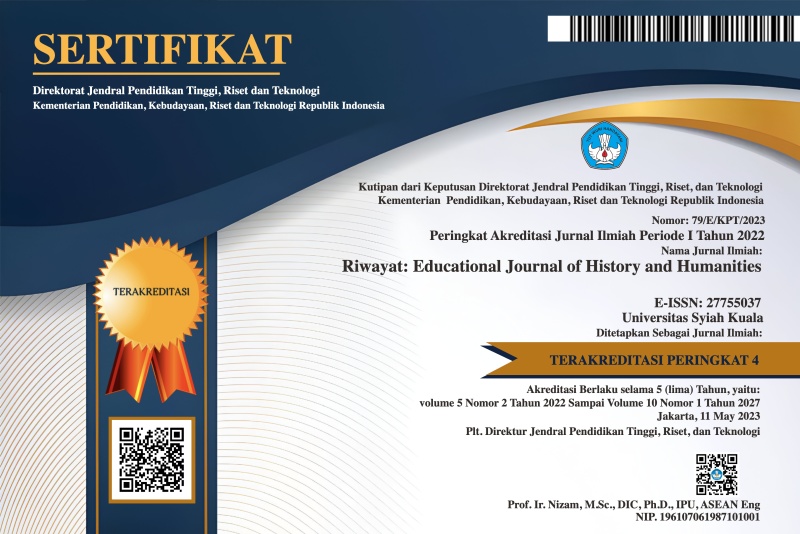

Published: Departemen of History Education, Faculty of Teacher Training and Education, Universitas Syiah Kuala, Provinsi Aceh. Indonesia

Situs web: https://jurnal.usk.ac.id/riwayat
Email: riwayat@usk.ac.id

Lisensi Creative Commons
Karya ini dilisensikan di bawah Lisensi Internasional Creative Commons Atribusi-BerbagiSerupa 4.0.